 Apple Podcasts
  YouTube
  Spotify
  Overcast
  Amazon Music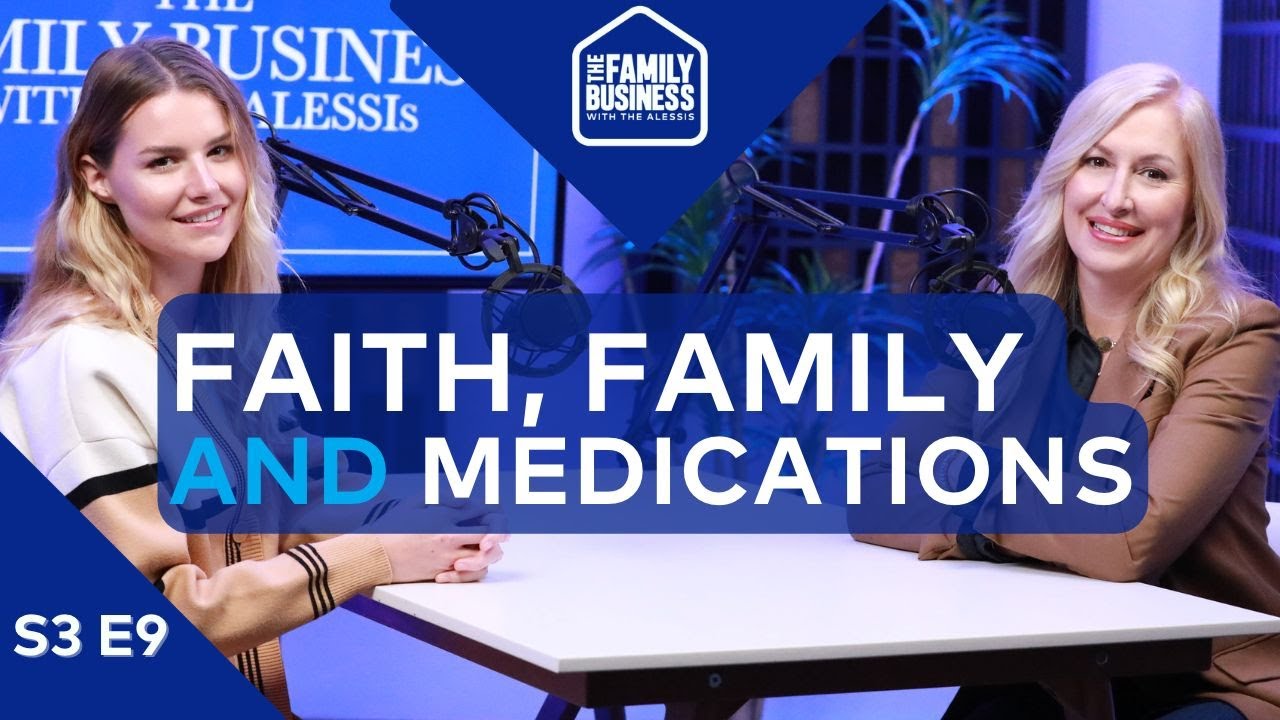
When a child gets a scary diagnosis from a doctor, parents can quickly feel overwhelmed. We're sharing here how we handled the issue of medication and other options, so that our kids could have healthy and worry-free lives.


In this episode, Mary Alessi and her daughter Lauren tell the story of receiving a life-altering diagnosis, how their decision on whether to use medications affected their family, and how they moved forward to give Lauren the best chance at a fulfilled and happy life.
When a child gets a scary diagnosis from a doctor, fear can overwhelm a parent. It's then that parents face a hard choice - whether to place their children on medications that may affect their lives in unknown ways.
Christians especially often have opposing views when it comes to faith, family and medicine, and The Alessis had to navigate these same issues as a family when both Lauren and her sister Gabrielle were diagnosed with epilepsy in their teens.
You'll discover how keeping an open mind can help you make the best choices for your family when you face a difficult diagnosis.

Other Related Episodes
Lauren Tells More of Her Story - Family Intervention: How to Help Your Kids Find Their Way
More Resources
From Dr. Caroline Leaf - Info on CBD and its benefits
DISCLAIMER: This episode cannot and does not contain medical/health advice. The medical/health information is provided for general informational and educational purposes only and is not a substitute for professional advice. Accordingly, before taking any actions based upon such information, we encourage you to consult with the appropriate professionals. Neither Metro Life Church, its employees nor designees are able to provide any kind of medical/health advice. The use or reliance of any information contained in this episode is solely at your own risk.
Join our family business every week as we talk about life, and help you build a great future with your family, no matter what business you are in.
New episodes are uploaded every Wednesday!
More Resources
Get your copy of the new book by Steve Alessi, “Forty-Two: A Guide to Finishing Well when You Thought You Were Finished”
Connect with Us on YouTube
Don't forget to LIKE and SUBSCRIBE to our YouTube channel!
Follow Us on Social!
Learn More about Metro Life Church:
Hello,
Intro: SN 3, EP 24
SPEAKER_02everyone. I am Lauren Alesi, and I know you usually don't see me much on here, but I hopped into the booth with my mom, Mary Alessie, and I'm excited to talk to you today about some pretty controversial topics. But I'm sure you're gonna want to hear it, so stay tuned.
SPEAKER_01Welcome to another edition of the Family Business with the Alessies, where we are gonna talk today, Lauren, about things we can't talk about on Sundays. Sundays are our church day. And so we can't really go off script too much on Sundays like we like to and get into some deeper conversation about topics that we love to talk about. And so today I am joined by my third child, Miss Lauren Lessie. She works on staff with us, and she is an incredible part of our team and has an amazing story that we wanted to share with you today. And we kind of jumped into the podcast booth with a different plan, right?
SPEAKER_02Yeah, we were gonna talk about kind of branch offing, branching off on a conversation we had in the car one day.
SPEAKER_03Yeah.
SPEAKER_02That ended up being a really great conversation, and you're like, oh my gosh, let's put this in the podcast. And then as soon as we walked in the room, we're like, hey, why don't we talk about this?
SPEAKER_01This podcast booth creates all kinds of crazy stuff. The minute you walk in, you go, ooh, topics start popping into your mind, really good ones. Yeah. Maybe a little controversial for some.
SPEAKER_02But it's also great because this topic is, like Alan said, it's very mysterious to a lot of people and it should be talked about within our family. And by family, I mean, you know, people close to us and who are wondering how we handle that situation.
SPEAKER_01This particular topic that we're going to talk about, Lauren, is controversial amongst uh maybe your inner circle, people that always want to give you their opinion, people that um have their experiences and what they think you should do, um, Christians as well, that you have on both sides of the spectrum of feeling like maybe you should do this, and some that feel like you shouldn't do this. Yeah. Some that are teetotalers, and others that are, no, there's aid here, there's help here. Trying to create a little mystery before we jump into the conversation. It's a little bit more fun to get the listener to be going, what are they talking about? So I'm not gonna tell you just yet, but um I know for our family, this particular topic we've never talked about to this degree. This is a first. I think dad's gonna freak out that he wasn't in the room for this conversation, but that's okay. He'll survive. Um, we miss him today. He's not in the room with us, but he's asked us to take over this particular podcast. I think we're gonna do another one right after this that's gonna lean into what to do when you're in that season. But um, this is not an easy decision when you are faced with it. It's very difficult. And what makes it harder is all the voices and all the opinions, all the fear and all the doubt. It's the what-ifs around it. So, do you want to tell our listeners what we're talking about?
SPEAKER_02We are talking
Medications and Long-Term Decisions
SPEAKER_02about when you are struggling with sickness, excuse me, or maybe disease in your body, whether or not to go on medication, long-term medication for the rest of your life. Short-term can be a little different because you know, okay, I'm eventually gonna get off of this medication, but it's a big decision when your doctor is recommending long-term medication and you're not sure whether, you know, how your body's gonna react, whether you should lean on God's protection and God's healing, or whether you should just, you know, take the medication, how you should go through that.
SPEAKER_01Yeah.
SPEAKER_02So yeah, that's what we're talking about today. It's a lot.
SPEAKER_01It's uh it's an interesting topic because our family has had to make some decisions. We'll get into that in a second. I want to say this though, that we are living in a society that medicines and pharmaceuticals are not just suggested, they're pushed.
SPEAKER_02Yeah, they're shoved down your throat.
SPEAKER_01They really are. I mean, every commercial, I feel like who owns all these sponsored ads? Is it just pharmaceuticals? And it's interesting to me because it's like fast food, Domino's, Burger King, Pizza Hut, owns marketing. And then right behind that is all these pharmaceuticals that you need to ask your doctor for. I can tell you, in my season of life growing up, I didn't know anything about meds. There was, I didn't, I wouldn't have known my parents didn't know that much about medication. Now, their generation abused medications too, um, but they didn't have the plethora of options. And they didn't have a pharmaceutical company that has in some ways created a lot of relief for people. There are, there are good medicines out there that are good for people. You said the word short term, and that's very important because we know long-term, the medication in and of itself can do more damage. Sometimes they say more harm than good. That's why you have to see your doctor, make sure you're talking to your doctor. Your doctor is the one who should lead you in the Holy Spirit to make sure you know if you're a Christian, you're you're doing the right thing. But there is a society right now, and there seems to be a culture of um a pill for every ill.
SPEAKER_02Yeah, that's good.
SPEAKER_01I like that. And and that's what we are dealing with. You you go to the doctor to get a pill. And if you if he doesn't know what to give you, you tell him, Well, I saw this commercial.
SPEAKER_02Yeah.
SPEAKER_01So uh they told me to ask you for this, you know. And I think the majority of people, the majority of logical thinking people don't do that. They're not rushing to just pop pills because they do have long-term effects and you feel them. You know, you're not just taking it blindly. You do feel the effect of being on medication. There's a lot of kids that are on hyperactive medication, that are on ADHD medication. There are young people that are now more than ever on bipolar meds, anxiety, depression meds. And I want to say very clearly, I've changed my my, really, I would say my opinion over the years. When I was in my 20s and 30s, my mindset was, you're crazy, you don't need that. Run around the block. You know, you go outside and exercise, stop eating French fries. You know, I had a different mentality. Now that I'm older and I can see how somebody's system can become depleted because of trauma, because of situations in their life, maybe just an imbalance in the hormones. We're seeing environmentally things are changing. That there are times when the right cocktail, yeah, prescribed by your doctor, yeah, can bring you relief even in like a six months to a year period. So we don't have a, you know, pills are bad, doctors are bad, medications are bad. We do lean more to care than we do treatment. And I think everybody should, but we also are grateful for every breakthrough that's healthy from doctors that help us be better. And so that kind of leads us to your story.
SPEAKER_02Because we can I just say one thing real quick before you.
SPEAKER_01Absolutely.
SPEAKER_02It's people may already be listening to this and be like, doctors are good. There's nothing wrong with medication. Why would you ever think there's something wrong with that or be skeptical about that? But anybody who's been prescribed a medication by a doctor knows it's very different. The thought of, okay, having to go on medication for a long time. That thought is nothing than when your doctor goes, okay, here's this medication, get it refilled, you know, every month for yourself or for your kid. And then realizing that's gonna be a chore. I have, and then you're you're kind of faced with, okay, is this for the rest of my life? Is this till I'm 21? Is this till I'm 30? Like, is this how every day? Every day I've got to take this, or if you're a parent whose kids are on stimulants and your doctor or your pediatrician is like, okay, this is what I recommend, you're like, every day. So the thought of it may be not as scary, but the reality is very, very different. That's very true. So I just for people who think it's, you know, nothing and yeah, we should just listen to doctors, it's very, very different than when you're faced with, you know, the reality of it. I just want to say that real quick.
SPEAKER_01I agree. And I we've gone for your situation, we've tried changed doctors.
SPEAKER_02Yeah.
SPEAKER_01Um, because we wanted to find a doctor that kind of gave us a little hope for the future to be able to get off the med. Yeah. That there might be, or maybe not even that, but there are other alternatives that they would be willing to try that are more natural. So we wanted to have those options and not just lock down for the rest of your life, you know, this is what it's gonna be, wrap your mind around it. Yeah. However, I really feel like you've brought a lot of peace to it because not that you've just accepted something hard, but you've come to terms with it. So let's get into it. Let's tell people what we're talking about. And I'm gonna let
Lauren's Story of Being Diagnosed
SPEAKER_01you lead that part of the conversation if you want to tell the story.
SPEAKER_02At 15, I had my first seizure. I at first thought it was nothing. Um, and then no, that's not true. I think when it happened, I was like, okay, that was definitely something.
SPEAKER_01No, no, it wasn't.
SPEAKER_02And then um it happened like two more times, and then finally we were like, okay, let's go see what this is, let's go get this checked out because it had happened by myself. So you none of us knew it was a seizure. Yeah. We just thought I blacked out, I passed out. Um, and so we called the paramedics, and then we got it checked out. And I it's kind of funny, I specifically remember this one moment where, oh, sorry, where um I got an EKG done, and within seconds, the woman, it was like this this Cuban lady, she was running it. She was like this grumpy, grumpy lady at Baptist, and she's like, Yeah, it's epilepsy. And that was within a second, she saw the brainwave. She's like, Yeah, it's up, she's epileptic for sure. She just said it.
SPEAKER_01Oh my.
SPEAKER_02But I remember dad's reaction being like, Why would you say that? Yes. What gives you the authority to just say that? And in the moment I was 15, I was like, Dad, don't get mad at the lady. Like, she's just doing her job. But now at this age, I see it's like, okay, he's raised me my whole life. Right. You know, like what gives that woman who doesn't know me any authority to say that over my life? You know? So now I see that totally different. But at 15, I was told I was epileptic. And I know I get teary-eyed now because I was just so young. I know, you know. But um, and I cry every time I'm in this booth. It's so annoying. Alan Why is the booth, Alan? Maybe it's Alan. No, but it's funny. Now I can this sounds really dark. And I was telling talking to somebody else who has a similar story.
SPEAKER_03Yeah.
SPEAKER_02But we can actually look back at some of the moments and kind of laugh about them, which sounds really messed up. And I know if you're listening, you're like, how and what sometimes we tell the stories and we laugh about it. And some people are like, they don't get it at all, and they just have this terrified look on their face. But you're like, you don't get it. We've we've been through that. We've we're we're healed, we've overcome it, we're good, you know. Um, I've been seizure-free for three years now. Like, I'm good, I'm really good. But um that at 15, 16, I was handed like the note. Okay, here's the medication, you're gonna have to get on. Yes. Um, and it wasn't optional. You see your doctor, you walk in wondering what's wrong with me. You walk out, you're epileptic. This is the medication you're on for the rest of your life. And that's a reality for a lot of people. A lot of parents go into, you know, they put their kids in school, and their teacher goes, Hey, I think your kid might have something wrong with them. Right. They take them to a specialist, walking in, not really knowing what's wrong with their kid. They walk out, your kid has ADHD and your kid needs to go on stimulants. It's not optional.
SPEAKER_01No, and it's overnight. It's overnight. Stress into this reality.
SPEAKER_02Yeah. And so it becomes that's what I mean by the thought of it is easy. Oh, of course I'd, you know, go on medication. But the reality of it is you walk into a doctor's office wondering, is anything wrong with me? You know, you're you're thinking I could walk out and just be like, oh, you know, just drink more water. Yeah, right. That's also in the back of your head. You know, your doctor's gonna tell you you just need vitamin C and water and you're good. But you walk out within an hour, two hours, and they go, No, you have epilepsy, you have ADHD, you know, you have bipolar, you have something else, and you're on this medication for the rest of your life.
SPEAKER_03Yeah.
SPEAKER_02And you've got to refill it every month. You're fighting insurance companies and running out, and yeah.
SPEAKER_01So that's the that's kind of the gist of it. Um it's not as easy or uh easy of a transaction.
SPEAKER_02No.
SPEAKER_01As we might think on this, on the healthy side of something. Yeah. And just get a pill, and it's not that easy.
SPEAKER_02And I think that's why also like we don't we don't share this. Uh I'm more of a private person in the family. And this was something I had to go through, and I wanted to make sure I was healed and totally overcome, not just physically, but mentally.
SPEAKER_01Right.
SPEAKER_02Um, before I shared it and I made it like a huge inner thing. So, but that was it. You know, I I was epileptic at 15 and I had to get it. I had to get on medication. But very quickly, they let me know. Um, actually, no, my doctor didn't let me know this. We had Caroline Leaf come to church. That's right. And you talk to her, and you're like, my daughter's been having seizures, she's 15, you know, this happened, and she told you, and it gave me a lot of hope, and it gave you a lot of hope. She goes, This is temporary. By the time she's in her 20s, it'll go away. Yeah. And she said, This is a very hormonal um time of her life. Yes. So her hormones are peaking, and this is why it's creating kind of a chain reaction in her body. Yep. And it was actually at a time where it had, I don't know if you remember this, I had started with severe like migraines. Yes. Severe, severe migraines. Where your speech would be slurred. My speech would be slurred, I would lose vision, yeah, and I stopped having migraines and it turned into seizures. Yeah. And so it was all really a just a teenage pivotal hormonal time in my life where it just created a chain reaction in the body.
SPEAKER_01Yeah.
SPEAKER_02So yeah, that's that's the gist of it. Yeah.
SPEAKER_01And you know, we wanted to talk about it because it's funny how when as a family we've managed it and we've dealt with it, and you've managed it so well. Um Gabby started having seizures shortly after you did, which blew our mind. I remember thinking something's in this house. Yeah. This isn't normal. There's something in the mold. I don't know if Gabby's in here. I think Gabby's in there, but she might be gone. Yeah, she she she walked out. But I can remember telling your dad, there's no way both of our girls.
unknownYeah.
SPEAKER_01There's just no way. There is no way. And he's like, well, Mary, if it's genetic and it's hormonal, yes, there it is, because his mom and his sister both have suffered from seizures. His mom for all her life. She's still on high doses of seizure meds and she functions great. Yeah. And as long as she takes them, she's fine.
When Your Faith Is Challenged
SPEAKER_01Um, his sister was able to get off of them at a certain period of time and then just was never on them again. Yeah. So there's different degrees. And I think for us as Christians, I know for me personally, the struggle that I had was I should be able to just speak to this thing. I should be able to have enough faith and law and teach Lauren to have the faith and Gabby to have the faith. And this is just going to be healed and go away. There's no way God's going to let me down. Yeah. And what I realized through that was yes, God can do anything, and yes, God can heal anything. But there was also a maturity in me that kind of had to develop that being a part of this fallen world, being in the earth, there's sicknesses. There are setbacks. There are things that naturally happen. It doesn't make God any less good. Yeah. Being perfectly healed and whole is the promise of heaven, not of earth. The Bible actually tells us that in this life, we're going to have struggle, struggles, we're going to have setbacks, we're going to have hardships. How do we manage those? Do we blame God? Is it God's fault? Did God forsake us? Did He leave us? No, so I really grew through that because it's one thing when you get sick, it's another thing when your kids do. It buckles your knees. When you cannot help your children, it's way worse than your own sickness that might attack your body. You can't imagine how disarmed you feel. The helplessness as a parent. Because you want to be able to control that. That's your child. And when you can't, and you've got this outsider looking at you that may not have the best bedside manner, going, here's what they're going to need, and they write this prescription.
SPEAKER_02And it's just protocol to them. They're not, you know, worrying about you or, you know, your emotions.
SPEAKER_01It's just protocol. Yeah. And and just go get this, and this is what she needs, and you want more answers, and they're just not coming. And that's a real struggle and a battle for the parent. So whether it's seizures, whether it's ADHD, autism, all of that, I think for all of our journey through this process, it really taught us that epilepsy isn't not necessarily sickness. It's a condition.
SPEAKER_02Yeah.
SPEAKER_01It doesn't mean you're sick. It doesn't mean you're weak. It's just a condition. It's something that's in your body that you can overcome and still live a very full life, a very happy life. You're not any less than, your life is not restricted in any way, shape, or form. You just have to take this pill. And it was a mindset shift for me to say, okay, it's going to be okay. I don't have to get stuck here and obsess over this and oh my gosh, what's going on in Lauren's body? But we did have to talk about the long-term effects of the medication. Which is something that we we should talk about a little bit because even in our family, you know, we've done a lot of research on our own. We have asked a lot of really well informed people, not neighbors and not just people that, you know, I tried this, I tried that. Really well-informed specialists. We've talked to a lot of people, and they all say the long-term effects of medication, whatever it is, they're not always good. But sometimes they're better than the alternative. Yeah. You know? So we really sought to find a practical position that honored our beliefs and our values and honored our bodies, and honored the fact that this was a medical breakthrough drug that would give you a functioning life. You would not have to walk around worried you were going to have a seizure, or not be able to go spend the night at a friend's house, or not be able to swim in the pool, or not be able to so that this pill kept you from living in a very limited situation.
SPEAKER_02And I will say, I mean, getting into more practical side of medication, um, I was grateful that when I did have seizures, they were always very, you know, timely. It always happened in pretty much the same place, like same time, same, you know, around the same time of month, you know, like it was very predictable. So with the medication, once I learned all those things, it just became more about just being responsible.
SPEAKER_01Right.
SPEAKER_02Um, we did, I did go on one medication, and at that point, it's seizures. It's not something I don't I don't know what else to compare it to. But in my head, I'm like, let me just take something so I could stop having seizures. Like my body's just tired. Let me just stop having them. So for me, it wasn't a question. I was also so young.
SPEAKER_01Yeah.
SPEAKER_02Um, but now that I'm a little bit older, I will say I do think about the more natural ways that I could take the more holistic approaches. Just because as you get older, you start to see the effect it does have on your body. Yes. Um, but I did,
Weighing Your Options
SPEAKER_02I sorry, back to the more practical means of medication. Just because your doctor says, take this, that is not your only option.
SPEAKER_01Right.
SPEAKER_02There was one medication, the first one I went on, and I didn't notice it, but my family said it's giving you mood swings, it's making you a different person. Yes. So we immediately went to the doctor and he refused to give me a different one. He's like, I'm sorry. It's just the switching over may cause another one. And they try to make you seizure free for a good year. And the issue was, you know, something with I couldn't get my license until I was a full year seizure-free. So I appreciated, you know, him trying to make me seizure-free. I really did, but I was on this tough medication. Um, and so you said, We're gonna find a better doctor. And we found a great doctor at the University of Miami Hospital. He was a neurologist there. And when we went to him, his attitude about everything was so much better. Yes. And I just appreciated that so much because I'll never forget um a theologian on Instagram that you guys talk about all the time. He had said, you know, a lot of times people are against medication, but when you pray for healing in your body, when you pray for, you know, God to heal you, God can use medication to heal you. God can use those means. It's not just all the time, you know, you're God touches you and you're healed. God can use any means to heal you.
SPEAKER_01Absolutely.
SPEAKER_02And so I really started to believe that over my body. And so we went to this new doctor, and he was the one that said, okay, we're gonna switch you over to this more safe one, and we're also gonna add this one on top, um, just to kind of support the medication. And from then, from seeing him on, it was like seizure-free done. I uh he was the one that really helped me. Um, we also asked him about CBD and holistic healing.
SPEAKER_01Yes.
SPEAKER_02And I was grateful that we had people in the church who had like a pharmacy here who was more holistic and they were able to walk me through the process. And that doorway of other options just besides medication was just so relieving to me. It gave you. Hope. It did give me hope because medication can only take you so far. Right. And then at some point you're going, like, okay, what are my other options? I don't just want to keep switching medications. Now my body just feels like it's just tired of medication. It's just done. Um, but that was really helpful. And then we saw another doctor that had nothing to do with epilepsy at all. It just had something to do with like some gut problems I was having uh having. And he said, okay, try to get off of um gluten, dairy, and sugar. And at that point, I had like really bad skin problems. And he had read that I was epileptic on my file. And he said, Okay, if you take all this out of your diet, I guarantee that your skin problems will clear up and you might have better issues with your um epilepsy.
SPEAKER_01Yeah.
SPEAKER_02And I'll never forget that moment of like, okay, this man's a urologist. He's not even a neurologist. Like, right, right, right. But there are other options. And so a lot of times maybe you're totally against medication, which is fine. That's the you have every reason to think that way. But there are other options to whatever, you know, pathway you're looking at, whatever you're facing. Um, and it's okay to explore those options.
SPEAKER_01Absolutely. And you did start using CBD oil more regularly.
SPEAKER_03Yeah.
SPEAKER_01And you had said, and we we saw it in you, it really made a huge difference. Because the problem with the meds is that they they can also create side effects that you don't know. You're still learning yourself, you're not real sure. But even though you stayed on your medication, you needed kind of like a bridge medication, remember? Um, and that's what made you start it is so that you wouldn't have to keep increasing meds. You added the CBD and you had a neurologist that was like, go for it. Yeah, try it. So that was so hopeful and helpful. And that was, you have said, was the thing that really changed.
SPEAKER_02Yeah, that was the game changer. I think I I felt a total difference in my body, just like a just a calmness inside my body when I started using CBD for sure, which I know some people maybe they have their own thoughts about. But for me, I mean, when it comes to your health and it comes to, I just want to stop having even like little, you know, twitches at night or seizures. I didn't care at that moment. I was like, give me whatever will work. Right. And that was that was amazing. That was super helpful.
SPEAKER_01Well, you know, I I am not a CBD salesman, but I would endorse it, but you have to get a quality one. But what I think is interesting is in the last 10 years, it's been going on for a long time because so many people think CBD means marijuana, and it is not. It is the component of the it's the CBD, it's the plant side that doesn't have the high uh effect. So it's removed of the fact, the effect that gets you high. So for people that just want to get high, CBD is not for you. Not for you. It's not gonna do anything. It it calms you a little bit, but nothing significant that you go, oh, I'm on CBD, I took too much. Actually, the the the opposite is true. If you take too much of it, it couldn't disrupt your sleep, and then you're up at night, and um you just need a drop or two. And what it does is in the last few years, because there's people that have been desperate, that have needed the CBD technology and scientific breakthrough to work, but it's been locked up because pot, you know, marijuana was illegal, whatever. But since we have done so much research and so much study, what they've also understood is that there's a whole system in our body called the cannabinoid system, the endocannabinoids and the cannabinoids. I am, that's as far as I go, understanding, but I know that because of researching it for you. The research is there, you can study it. There's such good information. You can go to a holistic pharmacist and they'll tell you exactly what you need to get, the good kind. If the CBD oil does not come with like three or four pages of description of where it came from, it's not a good one. You want to make sure that you see all the farming um methods because it's all a plant. So it's all about how it's farmed and it's protected. Anyway, that's free for everyone to just look into that because I know that for a fact. But um there's so many ways that I really believe God is giving breakthrough to people who are searching. The Bible says, if you'll seek me, you'll find me. I think that means even in the area of health and wellness. So there are ways out there, there are natural ways that we've seen, you know, I love CBD oil. I don't need it regularly, but I love what it does for me. There's just an edge it takes off. And um, it's not a drug. It is not even a medicine. It's a natural supplement that just supports that system. That if we've had too many triggers and traumas and stressful situations in our life, and the older we get, that cannabinoid system, those stressors are overreacting overreact. In your case, you already had an imbalance in your brainwaves with epilepsy. But it's incredible how just a couple drops of that comes from the earth, comes from the ground, makes all the difference in the world. So not saying that we endorse it, but it's something to do the research on. Totally.
SPEAKER_02Um I had asked my doctor about CBD, the the one that we went to that that we switched over to. I said, What do you think about this? He said, No, I love it. Use it. Yeah. And he was, I think he's like German or Austrian. So he's like this.
SPEAKER_01He's into his late 70s. He's he's an older. He's an older man.
SPEAKER_02And he's like, if you want to try it, I love it. Do it. Yeah. Um, but he he made sure with me that whatever part was the holistic plant part, he's like, make sure that's 100%. Whatever else ingredients they might put in, make sure that's at zero. And and luckily the young living one is 100% natural and zero percent, you know, nothing else added. But he's like, if you try to add any other ingredients for your situation, it could add stimulants in your brain that actually make it worse and could cause a uh a seizure. So that to me was interesting. But I I also want to add in there that I respect doctors, I respect what my doctor has to say. Yeah, but also my doctors are not like what they say is not viable for my life. Yeah. So I I want to know what their studies say, what they have to say about, you know, CBD. What do they think about that? I want to know what they have to say about Kepra, about L'Amycto, about the medications I'm on. What are your opinions? But I'm not going home hanging every hat on my doctor's words. Right. I don't, I don't take that as Bible for everything. I have my own convictions, I have my own beliefs, and I stand on the word of God for all of that. And you know your body. I know my body, and I'm very I I treat my body like a temple because I know that that's what the word of God says to do.
SPEAKER_03Yeah.
SPEAKER_02And especially when they um I I I was never like an unhealthy eater. That that wasn't me. But when that urologist said, Oh, try to stay away from these foods and watch how your whole you'll you'll see it all transform, it just showed me, wow, like it my body really is a temple and I do have to take care of it, and it affects everything. Absolutely. It's it's affecting everything from my brain to my skin to gut issues to everything. And I just to me, I know it sounds cheesy, but when you are facing like it seems like health issue after health issue, even acne, even stuff like really severe acne. Um, something like that, it seems like God speaking to you and giving you like what that theologian said, I don't have to send healing just by touching you, it could just be through a doctor's words. I could speak through a doctor a way to heal you.
SPEAKER_01Absolutely.
SPEAKER_02And so I think medication is great in its dosage. That's all I'm gonna say. But I do think, like you said, there are holistic ways that you can heal your body. I think that there are natural ways you can heal your body if you don't feel at peace with medication.
SPEAKER_03Right.
SPEAKER_02And I will say if you have a kid who um was diagnosed with ADHD, or I know that we are seeing a spike of that, especially in South Florida for some odd reason. Um if you just don't feel peace about it for whatever reason, if you feel peace about putting him on medication, that's that's you know your own conviction. I know there's more severe levels, I know there's more or less. Um there's different levels of every kind. But whatever the situation might be about medication, if you don't feel peace about it whatsoever, um just put a pause button on it, you know, because medication long term is for the rest of your life, and it's different to just get off of it. Your body does get used to it. That's right. Um for me, I felt peace getting on medication because I was 15 and I was like literally just anything to stop me from having seizures. But but I will say now I'm 24 and I'm like, okay, I think I want to get off this thing. I think I want to see the more holistic ways of doing this. I think I want to try the different ways of doing this. So I that's that's my take for anybody. If you don't feel peace about taking um pills, if you don't feel peace about taking medication or putting your children on medication, definitely put a pause on that and follow that piece, you know.
SPEAKER_01Absolutely. And
Maintaining Hope in Your Family
SPEAKER_01and back to you to just say this. You you I've even been more uh probably a little bit more reckless, you know, about you getting off. You've been very clear about you were you're gonna do it with the doctor's direction. You'll do it under a doctor's care so that you don't have any setbacks. And I want to also say this because I think this is a very um, this is keeps coming up in my heart, that when we found out about your diagnosis, which we knew before we went in, there was a struggle that dad and I had for a minute of what did that mean for your future? Because it's so uh typical for us. If you get a diagnosis, somehow that's attached to your future. Yeah. Your future's affected. You're not gonna be normal, you're gonna battle this forever. And we realized very quickly that that was not true at all. And even when you wanted to go to Hawaii for school, yeah, and dad and I were freaking out, we didn't want you to, and we'd said no, no, no, and you just kept shoving the Hawaii brochure in front of us and slipping it in front.
SPEAKER_02Which I was crazy.
SPEAKER_01Now that I think that, I'm like, please don't say that. Don't set, don't stick to your gun, sister, because me and dad, I know, me and dad questioned did we do the right thing? But I will say, going to that particular doctor that yeah, that was has been such a great doctor, sitting there with them, and I made the comment she wants to go to Hawaii for school. And both he and the assistant were like, that's awesome. Yeah, you should. And I said, Well, what happens if she has a seizure out there? And he said, Well, let's just agree together that she's not gonna have one while she's away. And I don't know that he's a believer. I don't think he is, yeah, but it it really convicted me because I thought, you know, even even under medication, even under a diagnosis, you still have to have faith. Yeah. You we don't put our faith in the drugs. We don't put our faith in the doctor. Even with that assistance, which is a blessing, we still have to have faith for our future that this is not a limitation. It's just something that's in your life that is a is a mountain, it's a hurdle. But wow, look what it gives you the opportunity to do. Yeah. Be stronger than anybody. Fight the good fight. Yes, you might have this diagnosis, but it's the diagnosis that's going to cause you to pull on that resource on the inside to say, in spite of it, I'm gonna live a normal life. And that's what you have done. So that taught me a lot. I mean, I I really do feel like my faith matured, my understanding of the healing power of God that I've always stood so firmly on, matured. And I think it's important for us to be balanced and use wisdom, use wisdom when it comes to this, which is what we've tried to do. And you're living you and have lived your very best life. I mean, you went away to Hawaii, I know, by yourself, E. Yeah. And we were like, you know what?
SPEAKER_02This is this is what needs to happen. And I had my last seizure in May, and I left in August. That's right. And that was my last seizure ever, yeah, ever. And I I remember being in Hawaii and I went to school, but I was mostly just, you know, exploring. But I felt the they say the the number two triggers for seizures are stress, and I I forgot the another one, but stress is like the number one. Um, and I remember just feeling so at peace, like all the time. Just I felt at peace, close to God, just relaxed all the time. And I really felt like that was just a healing component to my body, just being so at peace, absolutely so rested. Um, you know, even though I had early classes and homework due and long papers due, that that just didn't matter. I felt at peace in my body. I felt rested, you know? Yeah.
SPEAKER_01So I think it was more than just because we were like, don't let this just be Hawaii. Don't let Hawaii be what's good for her. No, God, she's gotta come back home. But I think it was it was the overcoming of going to Hawaii and not letting fear rule and reign in your life.
SPEAKER_02Yeah.
SPEAKER_01For all our entire family to let go and say, this is what we're talking about. If she has a seizure out there, they'll call 911. She's gonna be okay. You know, the good thing about epilepsy is the seizure doesn't do damage to you. It's if you fell or you hurt yourself having the seizure, that's where the damage is.
SPEAKER_02Yeah.
SPEAKER_01But the seizure itself doesn't really do any damage to your body, which is so interesting to me, or to your brain. You just don't want to have them because if you have them, it can open the door to more seizures, which just opens the door to potential danger. So we have a guest coming in the podcast room right now.
SPEAKER_04Wow.
Closing Thoughts from a Guest
SPEAKER_01I knew it. What did I say at the beginning of this? He's gonna get jealous. But he is not in on this conversation. Are you gonna join us?
SPEAKER_04Uh I think you guys are pretty much done.
SPEAKER_01Have we been? Are we at our time? Okay, good. All right, cool. Wow. You want to say anything?
SPEAKER_04I like this story.
SPEAKER_01This conversation was really good. You know, Steve, there's a lot of families, a lot of parents that this is what we wanted to talk about. When you get faced with that diagnosis and your kid is young or a young child, it's so scary. Right. The whole medical side of it. But what we hope we conveyed to people is that there's room for that and it's okay. It's not a death sentence, it's not an end-of-life sentence, it's not a vision sentence. Your kids can still overcome it and go on. And thank God for certain medicines that can be a blessing.
SPEAKER_04Well, I hope everybody's enjoyed the another episode of the Family Business with the Alessis, because Mary, Alessie, and Lauren Ann Alessie have evidently knocked it out of the park. So thanks for joining. Yep. Thank you guys.
SPEAKER_00You've just enjoyed another episode of the Family Business Podcast with the Alessis, and we can't thank you enough for being a part of our podiums today. Now that you've learned more about us, here's how you can join in in the family business. First, make sure you're following our podcast right now and download this episode so you can hear it at any time. Second, think of someone you know that might need or enjoy this episode and share it with them. You'll be helping them and helping us to spread the word about the family business. Third, go to AlesiFamily Business.com and tap the Ask the Alessies button. This is really cool. You can use it to record a voicemail comment or question, and we can add your voice to our conversations. Finally, while you're on our page, tap the reviews tab and you'll see a link to leave a review on Apple Podcasts. We love reading your reviews, and we might even share them on the show. Thanks again for joining us, and we'll see you next time at the Family Business with the Alesssies, because family is everybody's business.
